ChatGPT Chatbot Development: Unlocking the Power of Conversational AI

In recent years, the field of artificial intelligence (AI) has made significant advancements, and one of the most exciting and practical applications of AI is in the development of chatbots. Chatbots are computer programs designed to interact with humans in a conversational manner, and they have become increasingly popular in various industries, including customer service, marketing, and e-commerce.

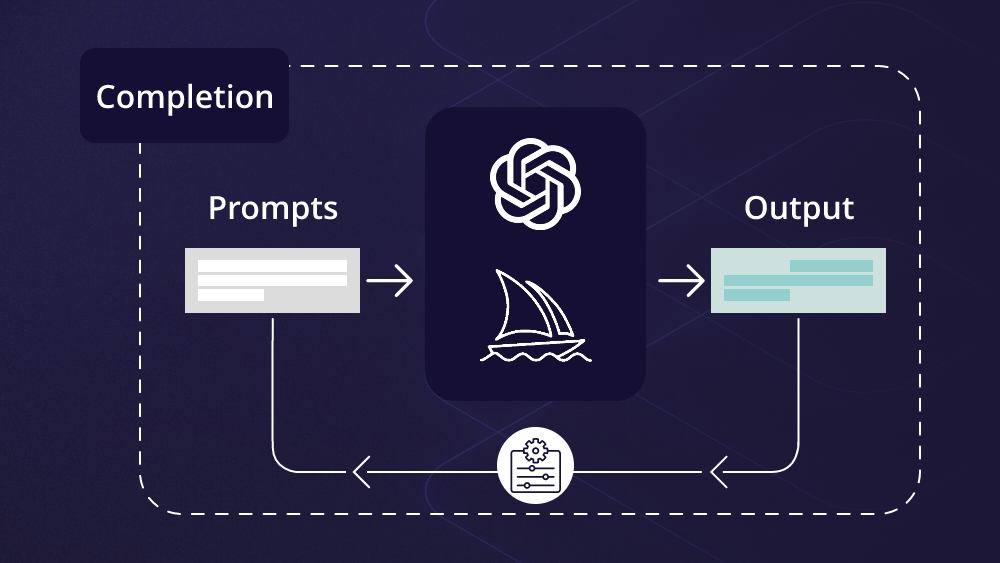
One of the leading technologies behind chatbots is ChatGPT, a large language model developed by OpenAI. ChatGPT is based on the GPT-3.5 architecture, which stands for “Generative Pre-trained Transformer 3.5.” It is a state-of-the-art language model that has been trained on a vast amount of text data, allowing it to generate human-like responses in a conversational setting.

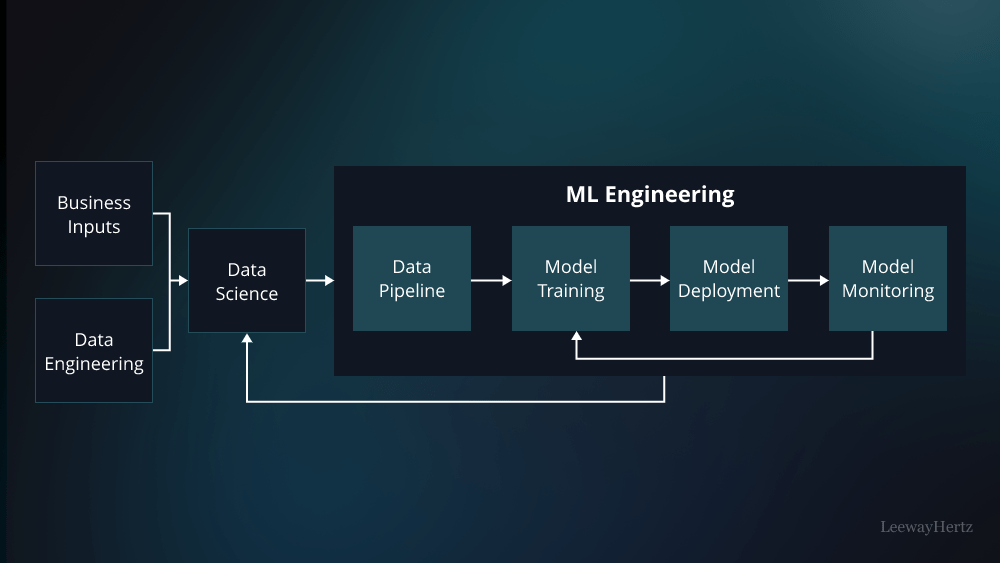
The development of a ChatGPT chatbot involves several key steps, each of which contributes to creating a sophisticated and effective conversational AI system. Let’s explore these steps in detail.

  1. Data Collection: The first step in developing a ChatGPT chatbot is to collect and curate a large dataset of text data. This dataset is used to train the language model and enable it to learn from a vast range of text inputs. The data can be obtained from various sources, such as online forums, social media, customer interactions, and other relevant text documents. It is essential to ensure that the dataset is diverse and representative of the type of conversations the chatbot will encounter in real-world scenarios.
  2. Pre-processing: Once the dataset is collected, it needs to be pre-processed to remove any noise or irrelevant information. This may involve cleaning the text, removing special characters, and normalizing the data to ensure consistency. Additionally, the data may be annotated with labels, such as intent tags or entity tags, to provide contextual information to the model during training.
  3. Training the Language Model: The pre-processed dataset is then used to train the ChatGPT language model. Training a language model involves feeding the dataset into the model and allowing it to learn the patterns and structures of the text data. The GPT-3.5 architecture is a transformer-based model that uses self-attention mechanisms to understand the relationships between words and phrases in a text, making it highly effective in capturing the nuances of language.
  4. Fine-tuning: After the initial training, the ChatGPT model is fine-tuned on a smaller, domain-specific dataset that is carefully curated to match the specific use case of the chatbot. Fine-tuning allows the model to adapt to the specific conversational context, including understanding the intent of the user’s queries, identifying relevant entities, and generating appropriate responses. Fine-tuning is a crucial step in ensuring that the chatbot provides accurate and relevant responses to user queries.
  5. Integration and Deployment: Once the ChatGPT model is trained and fine-tuned, it is integrated into the chatbot application. This involves developing the user interface, designing the conversation flow, and integrating the model with the chatbot’s backend infrastructure. The chatbot can be deployed on various platforms, such as websites, messaging apps, and social media platforms, to interact with users and provide them with a seamless conversational experience.
  6. Continuous Improvement: Chatbot development is an ongoing process, and continuous improvement is essential to ensure that the chatbot remains effective and efficient over time. This may involve regularly updating the dataset, retraining the model, and incorporating feedback from users to refine the chatbot’s responses and performance. Continuous improvement is critical in maintaining a high-quality user experience and ensuring that the chatbot meets the evolving needs of users.

In conclusion, ChatGPT chatbot development is a complex and iterative process that involves data collection

What is Generative AI model? How to create a Generative AI video Model

Generative AI models are machine learning models that can generate new data samples that are similar to the data they were trained on. They can be used to create new images, music, or even text. Generative AI models are a subset of deep learning models that use a type of neural network called a generative adversarial network (GAN) or a variational autoencoder (VAE) to generate new data.

Creating a generative video model requires a significant amount of expertise and computational resources. Here are some general steps you could follow:

Collect a dataset of videos to use as training data. The dataset should be diverse and include examples of the type of videos you want to generate.

Preprocess the data by resizing the videos to a consistent size, normalizing the pixel values, and extracting the individual frames.

Train a generative model on the preprocessed data. You could use a GAN or VAE to create a model that learns to generate new video frames that are similar to the input data.

Evaluate the model to see how well it performs at generating new videos. You could use metrics such as structural similarity index (SSIM) or peak signal-to-noise ratio (PSNR) to measure how similar the generated videos are to the input data.

Once you are satisfied with the performance of the model, use it to generate new videos by feeding it random noise as input and letting it generate new video frames. You can then combine these frames into a full video.

It’s worth noting that creating a generative video model is a complex task that requires expertise in machine learning, computer vision, and video processing. If you are new to these fields, you may want to start with simpler generative models such as those that generate images or text before attempting to create a video model.

What is the significance of blockchain for companies?

Blockchain technology is creating new opportunities and innovations for entrepreneurs to expand and expand their business. From decentralization to security immutability, smart contracts and much more, the blockchain technology has been instrumental in the development of new business models and has disrupted industries. Blockchain is a revolutionary technology that is poised to transform the way we do business, live and play.

blockchain-related consulting services to tap the power of blockchain to gain insights on your projects, including the DeFi protocol, NFTs, Web3, and Metaverse. From generating ideas to choosing the best protocols, our group will turn your ideas into practical applications.

What should you look for in a Blockchain development firm

But, selecting the best blockchain development and consulting firm isn’t an easy task. Many blockchain experts available who proclaim to be among the top however how can you tell?

If you are looking for blockchain experts it is important to ensure that the firm has a plan that details the time it will take to create your blockchain-based system in accordance with their experience and expertise in the field.

Blockchain Consulting Services

  • Training and strategy workshop
  • Blockchain Consultancy
  • Quick PoC
  • Blockchain development

The service takes the prior ones a couple of steps further by applying business processes and assisting clients to eliminate inefficiencies that may result in problems in the future. Through the development of a pertinent market segment, studying previous cases, and applying good methods of business, paired with technological knowledge, your blockchain advisor can make a significant difference in the performance of your company.

Introduce Yourself (Example Post)

This is an example post, originally published as part of Blogging University. Enroll in one of our ten programs, and start your blog right.

You’re going to publish a post today. Don’t worry about how your blog looks. Don’t worry if you haven’t given it a name yet, or you’re feeling overwhelmed. Just click the “New Post” button, and tell us why you’re here.

Why do this?

  • Because it gives new readers context. What are you about? Why should they read your blog?
  • Because it will help you focus your own ideas about your blog and what you’d like to do with it.

The post can be short or long, a personal intro to your life or a bloggy mission statement, a manifesto for the future or a simple outline of your the types of things you hope to publish.

To help you get started, here are a few questions:

  • Why are you blogging publicly, rather than keeping a personal journal?
  • What topics do you think you’ll write about?
  • Who would you love to connect with via your blog?
  • If you blog successfully throughout the next year, what would you hope to have accomplished?

You’re not locked into any of this; one of the wonderful things about blogs is how they constantly evolve as we learn, grow, and interact with one another — but it’s good to know where and why you started, and articulating your goals may just give you a few other post ideas.

Can’t think how to get started? Just write the first thing that pops into your head. Anne Lamott, author of a book on writing we love, says that you need to give yourself permission to write a “crappy first draft”. Anne makes a great point — just start writing, and worry about editing it later.

When you’re ready to publish, give your post three to five tags that describe your blog’s focus — writing, photography, fiction, parenting, food, cars, movies, sports, whatever. These tags will help others who care about your topics find you in the Reader. Make sure one of the tags is “zerotohero,” so other new bloggers can find you, too.

Introduce Yourself (Example Post)

This is an example post, originally published as part of Blogging University. Enroll in one of our ten programs, and start your blog right.

You’re going to publish a post today. Don’t worry about how your blog looks. Don’t worry if you haven’t given it a name yet, or you’re feeling overwhelmed. Just click the “New Post” button, and tell us why you’re here.

Why do this?

  • Because it gives new readers context. What are you about? Why should they read your blog?
  • Because it will help you focus your own ideas about your blog and what you’d like to do with it.

The post can be short or long, a personal intro to your life or a bloggy mission statement, a manifesto for the future or a simple outline of your the types of things you hope to publish.

To help you get started, here are a few questions:

  • Why are you blogging publicly, rather than keeping a personal journal?
  • What topics do you think you’ll write about?
  • Who would you love to connect with via your blog?
  • If you blog successfully throughout the next year, what would you hope to have accomplished?

You’re not locked into any of this; one of the wonderful things about blogs is how they constantly evolve as we learn, grow, and interact with one another — but it’s good to know where and why you started, and articulating your goals may just give you a few other post ideas.

Can’t think how to get started? Just write the first thing that pops into your head. Anne Lamott, author of a book on writing we love, says that you need to give yourself permission to write a “crappy first draft”. Anne makes a great point — just start writing, and worry about editing it later.

When you’re ready to publish, give your post three to five tags that describe your blog’s focus — writing, photography, fiction, parenting, food, cars, movies, sports, whatever. These tags will help others who care about your topics find you in the Reader. Make sure one of the tags is “zerotohero,” so other new bloggers can find you, too.

Introduce Yourself (Example Post)

This is an example post, originally published as part of Blogging University. Enroll in one of our ten programs, and start your blog right.

You’re going to publish a post today. Don’t worry about how your blog looks. Don’t worry if you haven’t given it a name yet, or you’re feeling overwhelmed. Just click the “New Post” button, and tell us why you’re here.

Why do this?

  • Because it gives new readers context. What are you about? Why should they read your blog?
  • Because it will help you focus your own ideas about your blog and what you’d like to do with it.

The post can be short or long, a personal intro to your life or a bloggy mission statement, a manifesto for the future or a simple outline of your the types of things you hope to publish.

To help you get started, here are a few questions:

  • Why are you blogging publicly, rather than keeping a personal journal?
  • What topics do you think you’ll write about?
  • Who would you love to connect with via your blog?
  • If you blog successfully throughout the next year, what would you hope to have accomplished?

You’re not locked into any of this; one of the wonderful things about blogs is how they constantly evolve as we learn, grow, and interact with one another — but it’s good to know where and why you started, and articulating your goals may just give you a few other post ideas.

Can’t think how to get started? Just write the first thing that pops into your head. Anne Lamott, author of a book on writing we love, says that you need to give yourself permission to write a “crappy first draft”. Anne makes a great point — just start writing, and worry about editing it later.

When you’re ready to publish, give your post three to five tags that describe your blog’s focus — writing, photography, fiction, parenting, food, cars, movies, sports, whatever. These tags will help others who care about your topics find you in the Reader. Make sure one of the tags is “zerotohero,” so other new bloggers can find you, too.