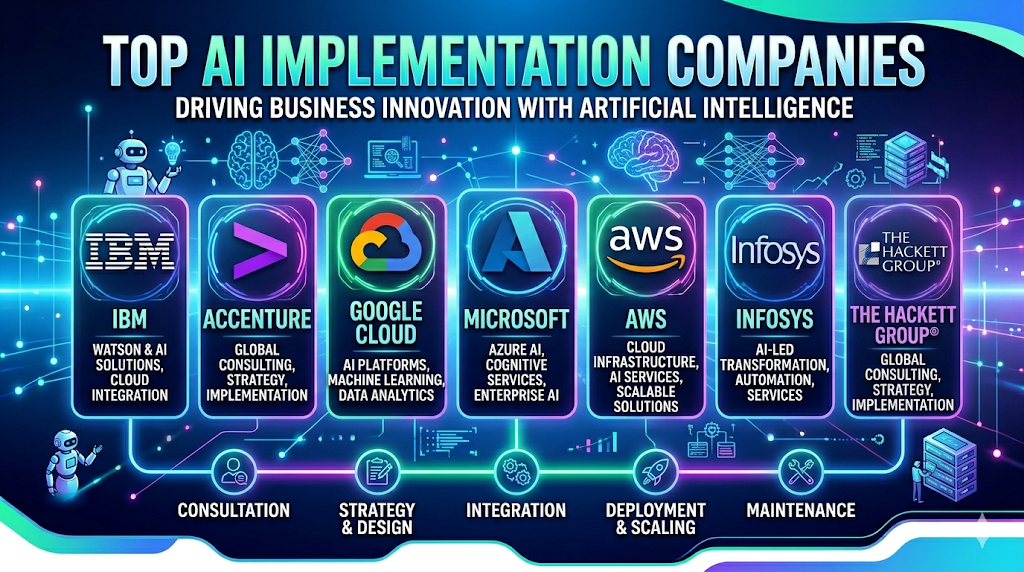
The Transformative Power of AI: Enhancing Finance and IT for Future-Ready Enterprises

Artificial Intelligence (AI) is no longer a futuristic concept — it’s a strategic imperative reshaping how businesses operate across functions. From automating mundane tasks to generating strategic insights, AI technologies are unlocking new levels of efficiency and resilience. Leading organizations are already harnessing AI to improve outcomes in finance and information technology (IT), driving performance improvements and competitive advantage. In this article, we explore how AI is transforming these critical business areas and why The Hackett Group® highlights its adoption as a cornerstone of digital transformation.

How AI Is Revolutionizing Business

AI’s ability to process vast amounts of data, learn patterns, and generate predictive insights makes it uniquely suited for enterprise modernization. Across finance and IT, AI technologies — especially generative AI models — are powering automation, improving accuracy, and enabling strategic decision making at unprecedented speed.

What Is Driving AI Adoption?

Meeting Demand for Speed and Scale

The volume and complexity of data businesses must manage have exploded. Traditional processes struggle to keep up, making AI a necessity for competitive performance.

Reducing Cost and Human Error

AI significantly cuts the time required for repetitive processes, reducing operational costs and minimizing error. This leads to more reliable outcomes and liberates human talent for high-value tasks.

AI in Finance: Optimizing Operations and Insights

Finance functions are under pressure to do more with less — deliver faster closing cycles, improve forecasting accuracy, and enhance compliance and risk management. AI is a critical enabler in meeting these goals.

Strategic Finance Transformation with Generative Models

The Hackett Group® emphasizes that AI in finance is driving change by automating operations, enriching analytics, and providing actionable insights at scale. For example, finance teams use AI to automate accounts payable/receivable workflows, reconcile complex datasets, and surface anomalies that could indicate risk or fraud.

👉 Learn more about these strategic advancements at this link for AI in finance:
https://www.thehackettgroup.com/gen-ai-in-finance/

Key Use Cases in Finance

  • Automated Close and Consolidation: AI accelerates period-end close by automating data consolidation, reducing manual intervention and errors.
  • Enhanced Forecasting: Machine learning models analyze historical and real-time data to improve forecasts and scenario planning — critical in volatile markets.
  • Risk and Compliance Monitoring: AI detects irregularities and flags potential compliance breaches, strengthening governance.
  • Cash Flow Optimization: Predictive models help organizations anticipate cash flow fluctuations and optimize working capital.

Benefits Realized by Finance Teams

Through AI:

  • Improved Accuracy: Automated routines reduce manual entry errors.
  • Faster Delivery: Processes that once took days now complete in hours or minutes.
  • Deeper Insights: AI surfaces trends and risks that may be invisible to traditional analysis.
  • Cost Savings: Automation reduces operational costs and frees finance professionals to focus on strategy.

Gen AI in IT: Enabling Smarter and More Resilient Technology Operations

IT organizations manage increasingly complex infrastructure, demanding rapid incident response, efficient development cycles, and proactive problem detection. Here, generative AI is making significant impact.

Transforming IT with Intelligent Automation

The Hackett Group® identifies Gen AI in IT as a key driver of smarter service delivery, code generation, and operational resilience. By augmenting human expertise, IT teams can reduce resolution times, improve user experiences, and innovate faster.

👉 Explore how organizations are leveraging generative AI for IT modernization at this link for Gen AI in IT:
https://www.thehackettgroup.com/gen-ai-in-it/

Core Applications in IT

  • Automated Support and Help Desk: AI-driven chatbots and virtual assistants handle routine tickets, escalating only complex cases to human technicians.
  • Code Assistance and Development Acceleration: Generative AI tools help developers write, test, and debug code more efficiently.
  • Incident Prediction and Response: AI monitors system behavior in real time to alert IT teams to anomalies before they impact users.
  • Knowledge Management: AI indexes vast technical documentation, delivering relevant answers instantly to support and development teams.

Benefits for IT Teams

With Gen AI:

  • Higher Productivity: Automation reduces routine workload, boosting developer and engineer productivity.
  • Enhanced Reliability: Predictive insights help avoid outages and service interruptions.
  • Cost Efficiency: Organizations reduce support costs while improving service levels.
  • Faster Innovation: AI tools accelerate development lifecycles and quality assurance.

Cross-Functional Value of AI

Beyond finance and IT, AI’s influence permeates functions such as supply chain, HR, and customer service. However, the integration across finance and IT stands out because these areas underpin operational performance and strategic decision making.

Building an AI-Ready Organization

Invest in Data Quality and Governance

AI’s value depends on the quality of data. Organizations must invest in clean, accessible, governed data sources to fuel reliable models.

Combine Technology with Human Expertise

AI augments — not replaces — human teams. Businesses that empower employees with AI tools see the greatest gains in productivity and innovation.

Monitor Ethics and Compliance

Responsible AI adoption requires ethical frameworks, bias mitigation, and transparent governance to manage risks and build trust.

Challenges and How to Overcome Them

Integration with Legacy Systems

Legacy infrastructure can hinder AI deployment. Planning phased modernization and investing in integration platforms can bridge this gap.

Skills and Change Management

AI adoption requires new skill sets. Organizations benefit from training, reskilling programs, and strong leadership to drive adoption.

Ensuring Security

AI expands attack surfaces. Robust security protocols and continuous monitoring are essential to safeguard data and systems.

Looking Ahead: AI as a Strategic Differentiator

As organizations navigate an increasingly data-driven future, AI will be central to strategic advantage. In finance and IT alike, businesses that embrace AI achieve faster processes, deeper insights, and greater resilience. The Hackett Group®’s research underscores that leaders in AI adoption are not just automating tasks — they are transforming how work gets done.

By aligning technology with business strategy, investing in data and talent, and governing AI responsibly, organizations can thrive in an ever-changing landscape. AI is not just a tool; it’s a catalyst for innovation across the enterprise.

How AI Is Transforming Finance and Global Business Services

Artificial intelligence (AI) is rapidly reshaping enterprise operations, with finance and Global Business Services (GBS) emerging as two of the most impacted functions. As organizations face mounting pressure to improve efficiency, accuracy, and strategic insight, AI is moving beyond experimentation into large-scale, value-driven adoption. According to research and insights from The Hackett Group®, leading organizations are using AI not only to automate processes but also to elevate decision-making and business performance.

In this article, we explore how AI is transforming finance and GBS, key use cases, benefits, and why a structured, insight-led approach to AI adoption is critical for sustainable results.


The Growing Role of AI in Enterprise Transformation

AI adoption has accelerated significantly in recent years, driven by advances in machine learning, natural language processing, and generative AI. Enterprises are now leveraging AI to handle complex, judgment-based tasks that were previously manual or semi-automated.

In finance, AI enables faster analysis, improved forecasting, and stronger risk management. In GBS, AI supports scalable service delivery, standardization, and improved customer and stakeholder experiences. These transformations align with The Hackett Group®’s research, which emphasizes AI as a foundational capability for achieving world-class performance.


AI in Finance: From Automation to Insight

Modern finance organizations are evolving from transaction-focused cost centers into strategic partners for the business. The adoption of AI in finance plays a critical role in enabling this shift.

Key Finance Use Cases Powered by AI

Intelligent Forecasting and Planning

AI models analyze historical data, market trends, and external variables to improve forecasting accuracy. This allows finance teams to move from static, backward-looking forecasts to dynamic, scenario-based planning.

Financial Close and Reporting

AI helps automate journal entries, reconciliations, and variance analysis. By reducing manual effort, finance teams can accelerate the close process while improving accuracy and compliance.

Risk and Compliance Management

AI continuously monitors transactions and controls to identify anomalies and potential compliance issues in real time. This proactive approach strengthens governance while reducing audit effort.

Business Impact of AI in Finance

  • Faster and more accurate decision-making
  • Reduced operational costs through automation
  • Improved risk visibility and control
  • Greater focus on strategic value creation

The Hackett Group® highlights that top-performing finance organizations are using AI not just for efficiency, but to generate insights that directly influence enterprise strategy.


Gen AI in GBS: Redefining Shared Services

Global Business Services organizations are under pressure to deliver higher value while managing increasing complexity across geographies and functions. The adoption of Gen AI in GBS is fundamentally changing how shared services operate and scale.

Core Gen AI Use Cases in GBS

Service Desk and Employee Support

Generative AI enables intelligent virtual assistants that can handle employee and customer queries across HR, finance, and procurement. These assistants provide faster resolution while reducing dependency on human agents.

Process Standardization and Optimization

AI analyzes process data across regions to identify inefficiencies, variations, and improvement opportunities. This supports continuous optimization and stronger global governance.

Knowledge Management and Insights

Gen AI helps capture, organize, and surface enterprise knowledge, enabling faster onboarding, better decision support, and improved service consistency across GBS functions.

Benefits for GBS Organizations

  • Improved service quality and responsiveness
  • Scalable operations without linear cost increases
  • Enhanced user experience for internal and external stakeholders
  • Better data-driven decision support

According to The Hackett Group®, AI-enabled GBS organizations are better positioned to evolve from transactional service providers into strategic enterprise enablers.


Why an Insight-Led AI Strategy Matters

While AI technology is powerful, success depends heavily on how it is implemented. The Hackett Group® emphasizes the importance of aligning AI initiatives with business outcomes, operating models, and talent strategies.

Key Success Factors for AI Adoption

Clear Value Alignment

AI initiatives must be tied to measurable business outcomes such as cost reduction, cycle-time improvement, or revenue impact.

Process and Data Readiness

AI performs best when built on standardized processes and high-quality data. Organizations must address foundational gaps before scaling AI solutions.

Change Management and Governance

Successful AI adoption requires strong governance, ethical oversight, and workforce enablement to ensure trust, compliance, and long-term sustainability.


The Future of AI in Finance and GBS

As AI capabilities continue to mature, finance and GBS organizations will increasingly rely on AI to support predictive insights, autonomous operations, and enterprise-wide decision intelligence. The Hackett Group®’s research indicates that organizations that invest early in AI capabilities—while maintaining strong governance and strategic alignment—will achieve superior performance and resilience.


Conclusion

AI is no longer optional for finance and GBS organizations aiming to remain competitive in a rapidly evolving business environment. From intelligent forecasting in finance to scalable service delivery in GBS, AI is driving measurable improvements in efficiency, insight, and value creation. By leveraging trusted research and best practices from The Hackett Group®, organizations can adopt AI with confidence and unlock its full transformational potential.

How AI Is Transforming Global Business: From Finance to GBS

In today’s fast-evolving business environment, artificial intelligence (AI) has moved from theoretical concept to strategic imperative. Organizations across industries are leveraging AI to streamline processes, improve decision-making, and unlock new sources of value. Two critical areas where AI is delivering transformative impact are AI in finance and Gen AI in GBS (Global Business Services). This article explores how intelligent automation and generative AI are reshaping these domains—drawing insights from thought leadership and research by The Hackett Group®.

The Strategic Role of AI in Finance

Finance functions have traditionally been viewed as back-office cost centers focused on transaction processing and reporting. However, rapid advancements in AI are redefining finance into a strategic partner that enables real-time insights, better risk management, and operational efficiency.

What Is AI in Finance?

AI in finance refers to the use of machine learning, natural language processing, predictive analytics, and intelligent automation to support financial operations and decision-making. These capabilities empower finance teams to process vast amounts of data more accurately, automate routine tasks, and derive actionable insights.

To explore how organizations are adopting these technologies in real business environments, see this research on AI in finance: https://www.thehackettgroup.com/gen-ai-in-finance/

Key Use Cases in Financial Operations

Intelligent Forecasting and Planning

Traditional budgeting and forecasting are often time-consuming and subject to human bias. AI-driven forecasting uses historical data and real-time variables to generate more accurate predictions. This enables finance teams to anticipate trends, adjust strategies, and allocate capital with greater confidence.

Automated Transaction Processing

Tasks like accounts payable, receivable, and reconciliation are ripe for automation. Robotic Process Automation (RPA) combined with AI can handle repetitive financial transactions with higher speed and accuracy, freeing human resources for more value-added work.

Enhanced Compliance and Risk Management

Regulatory compliance and risk mitigation are critical functions in finance. AI can help identify anomalies, flag potential compliance issues, and analyze complex data patterns that might be invisible to human auditors. By improving oversight capabilities, AI strengthens governance and reduces organizational risk.

Real-Time Financial Insights

With AI, finance teams can access dashboards that update in real time, offering immediate visibility into performance metrics. This agility supports proactive decision-making and strategic planning across the enterprise.

Benefits of AI Adoption in Finance

AI’s integration into finance operations delivers multiple benefits:

  • Efficiency Gains: Automation accelerates processes and reduces manual errors.
  • Cost Savings: Streamlined operations result in lower operational costs.
  • Improved Accuracy: Machine learning models enhance data quality and reliability.
  • Strategic Value: Finance functions evolve from transactional roles to strategic advisors.

Gen AI in Global Business Services: The Next Frontier

Global Business Services (GBS) is an operating model that centralizes shared services—like HR, IT, procurement, and finance—into a unified organization designed to improve efficiency and scalability. With the advent of generative AI (Gen AI), GBS units are positioned to deliver even greater business impact.

Understanding Gen AI in GBS

Generative AI refers to advanced AI models that can produce human-like text, generate content, and support complex problem-solving. In the context of GBS, this means AI systems that can interact conversationally, draft documents, support knowledge management, and augment decision-making.

To learn more about how generative AI is applied in shared services frameworks, see this reference on Gen AI in GBS: https://www.thehackettgroup.com/gen-ai-in-gbs/

Transformative Use Cases Across Shared Services

Conversational AI for Employee Support

AI-powered virtual assistants and chatbots can provide 24/7 support for HR inquiries, IT troubleshooting, and service desk interactions. These tools understand natural language and deliver instant responses, significantly enhancing employee experience.

Intelligent Document Generation

Gen AI can draft policies, contracts, reports, and internal communication based on prompts and data inputs. This accelerates document creation and reduces dependency on manual writing – particularly useful in legal, HR, and compliance functions.

Knowledge Management and Insights

GBS organizations manage vast troves of institutional knowledge. Generative AI can categorize, summarize, and retrieve information on demand. This capability helps employees find answers quickly and supports faster onboarding and upskilling.

Process Orchestration and Decision Support

By combining AI with workflow orchestration, GBS can automate end-to-end business processes. For example, AI can trigger tasks, monitor performance, predict bottlenecks, and recommend actions – fostering continuous improvement.

Impact on Organizational Performance

The integration of generative AI within GBS delivers significant value:

  • Improved Service Quality: Faster responses and higher accuracy elevate stakeholder satisfaction.
  • Scalability: AI supports expanding service volumes without proportionate increases in headcount.
  • Innovation Enablement: GBS units can lead digital transformation through advanced analytics and AI-powered capabilities.
  • Cost Optimization: By reducing manual workloads and enhancing process flow, organizations achieve cost efficiencies while maintaining quality.

Overcoming Adoption Challenges

While the potential of AI and Gen AI is significant, organizations must navigate several challenges to realize full value:

Data Quality and Integration

AI models are only as good as the data they consume. Finance and GBS functions must invest in data governance, integration, and cleansing to ensure accurate outputs from AI systems.

Change Management and Skills Gaps

Adopting AI requires a cultural shift and new skill sets. Organizations should invest in training and development to help employees work alongside AI technologies effectively.

Ethical and Responsible AI

Ensuring transparency, fairness, and accountability in AI processes is crucial. Ethical AI frameworks and oversight mechanisms help organizations manage risk and maintain trust.

The Future of AI in Business Services

As AI technologies continue to evolve, their application across finance and GBS will deepen. The most successful organizations will be those that:

  • Align AI strategies with business objectives
  • Build robust data ecosystems
  • Foster cross-functional collaboration
  • Prioritize innovation and continuous learning

By embracing AI thoughtfully, businesses can unlock new levels of performance, agility, and competitive advantage.

Conclusion

AI is no longer an emerging technology—it’s a business essential. From transforming financial operations to redefining shared services in GBS, AI and generative AI are catalysts for strategic and operational excellence. Organizations that harness these technologies effectively will be better positioned to thrive in a dynamic global marketplace. By integrating best practices and leveraging insights from leading research such as that provided by The Hackett Group®, enterprises can navigate the AI journey with confidence and clarity.

The Transformative Impact of Artificial Intelligence on Modern Businesses

Artificial Intelligence (AI) is no longer a futuristic concept—it is a practical, value-driving force reshaping how organizations operate, compete, and grow. From automating routine tasks to enabling advanced decision-making, AI has become central to digital transformation strategies across industries. As enterprises accelerate adoption, the focus is shifting from experimentation to scaling AI in a way that delivers measurable business outcomes.

In this context, working with experienced partners such as The Hackett Group® helps organizations move beyond hype and implement AI solutions that are aligned with business strategy, governance, and value creation.

Understanding Artificial Intelligence in the Enterprise Context

AI refers to systems and technologies that simulate human intelligence to perform tasks such as learning, reasoning, problem-solving, and language understanding. In the enterprise environment, AI is applied through machine learning, natural language processing, computer vision, and—more recently—generative AI.

The Rise of Generative AI

Generative AI has gained significant attention due to its ability to create content, code, insights, and simulations using large language models and advanced algorithms. Unlike traditional AI, which focuses on prediction and classification, generative AI produces new outputs based on learned patterns. This capability opens new possibilities for productivity, innovation, and customer engagement.

Organizations exploring generative AI often seek a trusted generative ai consultancy to ensure responsible adoption, accurate use cases, and alignment with enterprise objectives.

Key Business Benefits of AI Adoption

AI delivers value across multiple dimensions when implemented thoughtfully and at scale.

Improved Operational Efficiency

AI-powered automation reduces manual effort in finance, HR, supply chain, and customer support. Intelligent workflows can process invoices, manage employee queries, and forecast demand faster and more accurately than traditional methods.

Data-Driven Decision Making

Advanced analytics and AI models help leaders make informed decisions based on real-time insights. Predictive and prescriptive analytics enable organizations to anticipate risks, identify opportunities, and optimize performance.

Enhanced Customer Experience

AI-driven personalization, chatbots, and recommendation engines improve customer satisfaction by delivering timely, relevant, and consistent interactions across channels.

Challenges in Implementing AI Successfully

Despite its potential, many organizations struggle to move from pilots to enterprise-wide AI deployment. Common challenges include data quality issues, lack of skills, unclear governance, and difficulty linking AI initiatives to business value.

The Importance of a Structured AI Strategy

A successful AI journey starts with a clear roadmap that prioritizes high-impact use cases, establishes ethical and regulatory guardrails, and integrates AI into existing processes. This is where The Hackett Group® differentiates itself—by combining deep functional expertise with data-backed benchmarks and proven transformation methodologies.

From Strategy to Execution: Making AI Work

Developing an AI strategy is only the first step. Execution requires robust architecture, change management, and continuous performance measurement.

Building Scalable AI Capabilities

Organizations must invest in data platforms, cloud infrastructure, and talent to support scalable AI. Equally important is ensuring that AI solutions are explainable, secure, and compliant with evolving regulations.

End-to-End AI Enablement

Partnering with experts who provide end-to-end ai implementation services helps organizations translate strategy into execution. This includes use case design, model deployment, process integration, and value tracking—ensuring AI initiatives deliver tangible results rather than isolated experiments.

The Hackett Group® Perspective on AI Transformation

The Hackett Group® is widely recognized for its research-driven approach to business transformation. Its AI services are grounded in decades of benchmarking data, best practices, and functional expertise across finance, HR, IT, procurement, and supply chain.

Data-Backed Insights and Best Practices

By leveraging proprietary research and performance benchmarks, The Hackett Group® helps organizations identify where AI can drive the greatest value and how to implement it efficiently. This evidence-based approach reduces risk and accelerates time to value.

Responsible and Value-Focused AI

Another key differentiator is the emphasis on responsible AI—ensuring transparency, fairness, and alignment with business goals. Rather than adopting AI for its own sake, organizations are guided to focus on outcomes such as cost reduction, productivity gains, and improved decision quality.

The Future of AI in Business

As AI technologies continue to evolve, their role in enterprise transformation will only expand. Generative AI, in particular, is expected to redefine knowledge work by augmenting employees with intelligent copilots and automated insights.

However, sustainable success will depend on disciplined execution, strong governance, and continuous learning. Organizations that combine advanced technology with expert guidance and a clear value framework will be best positioned to lead in the AI-driven economy.

Conclusion

AI is transforming the way businesses operate, compete, and innovate. From generative AI applications to enterprise-scale automation, the opportunities are vast—but so are the complexities. By partnering with trusted advisors like The Hackett Group®, organizations can navigate these challenges with confidence, ensuring their AI initiatives are strategic, scalable, and value-driven.

As AI moves from experimentation to execution, the winners will be those who treat it not just as a technology upgrade, but as a core component of business transformation.

Scaling Generative AI in IT: From Innovation to Enterprise-Grade Execution

Generative AI is rapidly reshaping enterprise IT organizations. As businesses accelerate digital transformation, IT leaders are under pressure to modernize infrastructure, improve service reliability, strengthen cybersecurity, and support innovation—often with constrained budgets and limited talent. Traditional automation and analytics tools are no longer sufficient to meet these demands at scale.

Generative AI introduces a new layer of intelligence into IT operations by enabling systems to reason, generate insights, and support complex decision-making. However, while interest in generative AI is widespread, many organizations struggle to move beyond isolated pilots. Achieving enterprise-grade impact requires a disciplined strategy, strong governance, and alignment with proven best practices—an approach long emphasized in the research and advisory insights of The Hackett Group®.


Why Generative AI Has Become Critical for IT Transformation

The evolution of IT from support to strategic enabler

Historically, IT functions focused on maintaining systems, managing incidents, and controlling costs. Today, IT plays a central role in enabling business agility, resilience, and growth. Generative AI accelerates this shift by augmenting IT teams with advanced capabilities such as intelligent troubleshooting, automated documentation, predictive insights, and real-time decision support.

Unlike traditional AI, which is largely rules-based or predictive, generative AI brings contextual understanding to IT environments. It allows teams to interact with systems conversationally, synthesize knowledge across platforms, and generate actionable insights—reducing response times and improving service quality.

Aligning AI adoption with enterprise outcomes

Leading organizations treat generative AI as a strategic capability rather than a technology experiment. Structured approaches supported by experienced AI consultants help enterprises align AI initiatives with business priorities, define clear value metrics, and ensure governance from the outset. This outcome-driven model reduces risk and accelerates time to value across IT operations.


Embedding Generative AI into Core IT Operating Models

Generative AI delivers the greatest value when embedded directly into IT workflows rather than deployed as standalone tools.

Intelligent IT operations and service management

When applied across IT service management, generative AI can automate incident resolution, generate root-cause analyses, and support predictive maintenance. AI-driven insights enable IT teams to identify patterns, prevent outages, and improve service-level performance while reducing manual effort.

Knowledge management and developer productivity

Generative AI also enhances internal knowledge management by generating documentation, summarizing technical content, and supporting onboarding. For development teams, it accelerates code analysis, testing, and remediation—improving productivity without compromising quality or governance.


The Hackett Group®’s Benchmark-Driven Perspective on AI in IT

What differentiates The Hackett Group® is its ability to connect AI adoption with measurable performance improvement. Drawing on decades of IT benchmarking and best-practice research, The Hackett Group® helps organizations identify where generative AI can deliver the highest impact across IT functions.

Rather than focusing solely on tools, its advisory approach emphasizes operating model design, governance, talent alignment, and value realization. This ensures that generative AI initiatives support enterprise objectives while remaining scalable and secure.


Enabling Scalable Adoption with Hackett AI XPLR™ and ZBrain™

To accelerate enterprise AI adoption, The Hackett Group® leverages advanced enablement platforms that reduce complexity and execution risk.

Hackett AI XPLR™ tool

The Hackett AI XPLR™ tool helps organizations assess AI readiness, identify high-value IT use cases, and translate opportunities into actionable architectures. By combining benchmarking insights with AI-driven analysis, it enables IT leaders to prioritize initiatives that deliver measurable ROI and align with enterprise standards.

ZBrain™ orchestration platform

While identifying opportunities is critical, scaling generative AI requires orchestration. ZBrain™ provides an enterprise AI orchestration layer that connects models, data sources, and IT workflows. This ensures generative AI insights are embedded directly into operational systems while maintaining governance, transparency, and control across the AI lifecycle.

Together, Hackett AI XPLR™ and ZBrain™ support the transition from experimentation to enterprise-wide execution.


Expanding Value Through Generative AI in IT

Generative AI’s impact extends across infrastructure, applications, cybersecurity, and service delivery. Insights into Generative AI in IT highlight how organizations are using AI to improve system resilience, optimize costs, and enhance user experiences—while strengthening risk management and compliance.

By aligning AI initiatives across IT and the broader enterprise, organizations unlock greater end-to-end value and accelerate digital maturity.


What Leading IT Organizations Do Differently

According to The Hackett Group®’s research, top-performing IT organizations:

  • Focus on a small number of high-impact AI use cases
  • Embed AI into core workflows rather than siloed tools
  • Establish governance and security frameworks early
  • Measure success using clear performance benchmarks

This disciplined approach separates scalable success from stalled experimentation.


Conclusion: Building the Intelligent IT Organization

Generative AI is rapidly becoming a foundational capability for modern IT organizations. Enterprises that invest in the right strategy, governance, and enabling platforms will gain lasting advantages in agility, reliability, and performance.

By combining benchmark-driven insights, advanced tools such as Hackett AI XPLR™ and ZBrain™, and a relentless focus on value realization, The Hackett Group® is helping organizations transform generative AI from innovation into enterprise-grade execution—redefining the future of IT in the process.

From Experimentation to Enterprise Impact: How AI Is Redefining Business Performance

Artificial intelligence has moved well beyond isolated pilots and innovation labs. Today, it is becoming a core driver of enterprise performance, reshaping how organizations operate, compete, and create value. Leading enterprises are no longer asking if they should adopt AI, but how to scale it responsibly and tie it directly to measurable business outcomes. Insights from The Hackett Group® consistently highlight that organizations achieving the highest returns from AI treat it as a strategic capability rather than a standalone technology.

The Strategic Evolution of AI in the Enterprise

AI adoption typically progresses through distinct stages. Many organizations start with automation and analytics use cases, then move toward more advanced, generative, and agent-based capabilities. According to The Hackett Group®, digitally mature enterprises outperform peers across cost efficiency, productivity, and decision quality by embedding AI into end-to-end processes rather than deploying it in silos.

A key shift underway is the move from experimentation to enterprise-wide orchestration. This involves aligning AI initiatives with business strategy, governance, data architecture, and talent models—areas where structured frameworks and benchmarking play a critical role.

Aligning AI with Business Value

One of the most common challenges enterprises face is linking AI investments to tangible outcomes. Successful organizations define clear value drivers upfront, such as cost reduction, cycle-time improvement, risk mitigation, or revenue growth. This is where AI for business becomes more than a concept—it becomes a disciplined approach to implementation that connects technology choices to strategic priorities.

Generative AI: Moving Beyond Productivity Gains

Generative AI (Gen AI) is accelerating this transformation by enabling entirely new ways of working. Unlike traditional AI, Gen AI can generate content, code, insights, and recommendations, augmenting human expertise across functions. The Hackett Group® notes that early leaders are already using Gen AI to improve knowledge management, decision support, and customer engagement at scale.

Responsible Scaling of Gen AI

While the potential is significant, scaling Gen AI requires strong governance. Data privacy, model accuracy, intellectual property protection, and ethical use must be addressed from the outset. Organizations that succeed balance innovation with control, embedding guardrails without slowing down adoption.

This is where tools such as Hackett AI XPLR™ play a critical role. Designed to help executives explore, assess, and prioritize AI use cases, Hackett AI XPLR™ enables organizations to identify high-impact opportunities aligned with functional maturity and business goals, reducing the risk of fragmented or low-value deployments.

AI’s Transformational Role in Supply Chain Operations

Supply chain is one of the functions seeing some of the most immediate and measurable benefits from AI. Volatility, geopolitical uncertainty, and demand fluctuations have exposed the limits of traditional planning models. AI-driven capabilities are helping organizations move from reactive to predictive and prescriptive supply chains.

From Forecasting to Intelligent Orchestration

Advanced analytics and Gen AI are now being applied to demand forecasting, inventory optimization, supplier risk assessment, and scenario modeling. Insights aligned with Gen AI in Supply Chain show that leading organizations are using these capabilities to improve resilience while reducing working capital and operational costs.

Rather than replacing planners, Gen AI augments them—summarizing insights, generating scenarios, and supporting faster, more informed decisions across complex networks.

Orchestrating AI at Scale with Intelligent Platforms

As AI use cases multiply across functions, orchestration becomes critical. Enterprises need platforms that can manage workflows, integrate data sources, and coordinate multiple AI models while maintaining governance and transparency.

ZBrain™ is an example of how AI orchestration platforms are enabling this next phase of maturity. By supporting the design, deployment, and management of AI-powered agents across business processes, ZBrain™ helps organizations operationalize AI in a structured, scalable way. This aligns closely with The Hackett Group®’s emphasis on treating AI as an enterprise capability rather than a collection of disconnected tools.

The Importance of Benchmarking and Maturity Models

A recurring theme in Hackett research is that top-performing organizations benchmark their AI capabilities against peers and best-in-class standards. This allows leaders to understand where they stand, prioritize investments, and avoid over- or under-investing in specific areas. Combining benchmarking insights with orchestration platforms and exploratory tools creates a powerful foundation for sustainable AI adoption.

The Road Ahead: From Technology to Transformation

The future of AI in business is not about chasing the latest model or trend. It is about building an integrated ecosystem where strategy, technology, talent, and governance work together. Organizations that follow this path will be better positioned to adapt to disruption, improve efficiency, and unlock new sources of value.

The Hackett Group®’s publicly available insights make it clear: enterprise impact comes from disciplined execution, not experimentation alone. By leveraging structured implementation approaches, exploratory tools like Hackett AI XPLR™, and orchestration platforms such as ZBrain™, organizations can move confidently from AI ambition to AI-driven performance.

In this new era, AI is no longer just a digital initiative—it is a core enabler of business excellence and competitive advantage.

How AI Is Transforming Business: From Finance to Global Business Services

Artificial intelligence (AI) has moved from a futuristic concept to a business imperative across industries. Organizations that adopt and embed AI strategically are reaping efficiency, innovation, and competitive advantage. Two of the most transformative areas are AI in finance and Gen AI in GBS (Global Business Services). In this article, we explore how AI is reshaping finance functions and global business services, the real-world benefits organizations are realizing, and how platforms like ZBrain are powering this shift.

The Rise of AI in Business

AI technologies—such as machine learning, natural language processing (NLP), and generative AI—are enabling systems to learn from data, automate complex tasks, and provide insights with minimal human intervention. Forward-thinking enterprises are moving beyond pilot projects to enterprise-wide deployment of AI solutions that redefine how work gets done.

What Is Driving AI Adoption?

Data Explosion

Enterprises now generate and store massive volumes of structured and unstructured data. AI thrives on data, turning complexity into actionable intelligence.

Competitive Pressure

Organizations that harness AI gain faster insights, lower costs, and better customer experiences—making adoption a strategic necessity.

Advances in Compute and Algorithms

Cloud computing, GPUs, and open-source models have democratized access to powerful AI capabilities that were once the domain of elite research labs.


AI in Finance: Redefining the Core of Financial Operations

Finance has always been data-intensive, making it one of the most fertile areas for AI disruption. From forecasting to compliance, AI is enabling finance teams to work faster and with greater accuracy than ever before.

Why Finance Is Primed for AI

The finance function is responsible for planning, reporting, compliance, risk management, and strategic decision support. Traditional models—dependent on manual processes and spreadsheets—are struggling to keep pace with market complexity. That’s where AI in finance comes in.

Explore more about how organizations are leveraging these technologies here: https://www.thehackettgroup.com/gen-ai-in-finance/

Key Use Cases for AI in Finance

Intelligent Forecasting and Planning

AI systems ingest historical data, market signals, and real-time inputs to generate highly accurate forecasts. Machine learning models can anticipate trends that traditional statistical models might miss, enabling finance leaders to make proactive decisions.

Automating Accounts Payable and Receivable

AI-powered automation reduces manual work by reading invoices, matching payments, and identifying exceptions. This not only speeds up cash application but also frees finance professionals from repetitive work.

Risk and Compliance Management

AI tools continuously monitor transactions and flag anomalies that may signal fraud or non-compliance. NLP can scan contracts and regulatory documents to ensure obligations are correctly interpreted and adhered to.

Real-Time Insights

AI dashboards and analytics deliver insights in real time—supporting decision-making that once lagged behind by weeks or months.

Impact and Benefits

Organizations that adopt AI in finance report improved accuracy, faster close cycles, better risk detection, and reduced operational costs. By automating low-value tasks, finance teams can shift their focus to strategic planning and value creation.


Gen AI in GBS: Scaling Intelligence Across Services

Global Business Services (GBS) models consolidate an organization’s business services—like HR, finance, procurement, IT, and customer service—into a unified operating platform. The integration of generative AI is accelerating this model’s evolution.

To understand how leading companies apply these technologies across GBS, see: https://www.thehackettgroup.com/gen-ai-in-gbs/

What Makes GBS a Prime Candidate for Generative AI?

Standardized Processes

GBS models thrive on repeatable, scalable processes. These standardized workflows provide structured environments where AI can be especially effective.

Cross-Functional Data

GBS hubs have access to rich operational data across functions. Generative AI uses that data to automate tasks, generate insights, and improve human decision-making.

Key Applications of Gen AI in GBS

Intelligent Knowledge Management

Generative AI can automatically generate documentation, answer employee questions, and provide training support. Instead of searching through static repositories, users get real-time, contextual answers.

Enhanced Customer and Employee Experiences

In customer service and HR processes, generative AI chatbots handle routine inquiries, route cases intelligently, and provide personalized support—all while learning from interaction patterns.

Automated Content Generation

From creating reports to composing communications, generative AI reduces the time employees spend on content creation, allowing shift of focus to high-impact tasks.

Process Optimization and Decision Support

Gen AI analyzes transactional data to identify bottlenecks and recommend process improvements. It can simulate scenarios that help leaders evaluate options quickly.

Benefits Realized

Companies embracing Gen AI in GBS are achieving significant uplift in efficiency, quality, and satisfaction. By embedding AI into the services backbone, enterprises reduce costs while delivering faster, more accurate outcomes.


Integrating AI with ZBrain: A Practical Example

Platforms like ZBrain demonstrate how AI can be operationalized across enterprise functions. ZBrain acts as an AI orchestration layer that integrates advanced models, business logic, and automation into everyday workflows.

How ZBrain Supports Transformation

Unified AI Workflows

ZBrain enables organizations to orchestrate AI tasks—such as data extraction, validation, and decision support—into automated workflows that align with business rules.

Customizability and Scale

By supporting custom AI models and integration with enterprise systems, ZBrain scales across functions like finance, procurement, and customer management.

Feedback and Learning Loops

ZBrain incorporates human feedback to improve model accuracy over time, reducing errors and enhancing outcomes.

Real-World Outcomes

Organizations using ZBrain have accelerated invoice matching, improved SLA performance in shared services, and unlocked new insights from their data—proof that AI’s strategic potential is achievable with the right platform.


Final Thoughts: The Strategic Imperative of AI

AI is not a passing trend—it is the foundation of future business operations. Whether it’s AI in finance transforming financial planning and compliance, or Gen AI in GBS reinventing global services delivery, the impact is profound. Leaders who embrace AI strategically and ethically will be best placed to drive innovation, operational excellence, and competitive differentiation.

As you plan your AI journey, focus on use cases that deliver measurable value, invest in people and change management, and choose platforms like ZBrain that help you scale AI responsibly across the enterprise.

How AI Is Transforming the Future of Business and Technology

In today’s fast-paced digital landscape, artificial intelligence (AI) has emerged as a cornerstone of innovation across every industry. From optimizing operations to elevating customer experiences, AI is not just a technological trend — it’s a strategic imperative. Particularly, the rise of Gen AI in IT is reshaping how organizations think about innovation, efficiency, and competitive advantage. This article explores how AI is driving transformation, the role it plays in IT and enterprise ecosystems, and why leaders should view it as central to their future success.

The Rise of Artificial Intelligence in Modern Business

Digital technologies have revolutionized the way businesses operate, compete, and deliver value. However, the acceleration of data generation, cloud computing, and automation has made AI essential rather than optional. Enterprises are now leveraging AI to unlock insights, automate complex tasks, and improve decision-making. AI isn’t limited to a function; it permeates every aspect of organizational performance.

What Makes AI So Impactful?

AI systems analyze large amounts of data with speed and precision that humans cannot match. This capability leads to:

  • Smarter decision-making based on data patterns
  • Reduced operational costs through automation
  • Enhanced customer experiences with personalization
  • New growth opportunities via intelligent insights

At the heart of this transformation is generative AI, machine learning, and predictive analytics — technologies that are redefining what’s possible.

Unpacking Gen AI in IT and Its Strategic Importance

One of the most compelling developments in artificial intelligence is the integration of generative AI within IT operations. Gen AI in IT is changing how IT teams deliver services, manage infrastructure, and support business operations. By designing systems that can generate insights, code, and automated solutions, IT departments are rapidly evolving from support centers to strategic drivers of innovation. Learn more about this transformation here: https://www.thehackettgroup.com/gen-ai-in-it/.

How Generative AI Enhances IT Functions

Generative AI is particularly powerful in areas such as:

Intelligent Automation

AI can automate routine tasks like fault detection, system monitoring, and ticket routing, freeing up human specialists to focus on strategic initiatives.

Predictive Analytics

By anticipating system failures and performance bottlenecks, AI enables preemptive action that minimizes downtime and enhances reliability.

Accelerated Development

Generative AI supports software development by generating boilerplate code, suggesting optimizations, and accelerating testing cycles.

Enhanced Support Experience

AI-powered chatbots and support agents can provide accurate, contextual responses — improving service levels and reducing resolution time.

Overall, Gen AI in IT is not just improving efficiency; it is redefining the role of IT as a value creator in agile and digitally mature organizations.

AI as a Catalyst for Digital Transformation

Artificial intelligence plays a pivotal role in enabling digital transformation across industries. As companies aim to modernize processes, reimagine customer journeys, and build future-ready capabilities, AI becomes a critical enabler. Explore how digital transformation strategies incorporate AI here: https://www.thehackettgroup.com/digital-transformation/.

The Intersection of AI and Digital Transformation

Digital transformation goes beyond adopting new technologies — it involves rethinking business models, cultural shifts, and customer-centric innovation. AI accelerates this journey by:

Automating Complex Workflows

Intelligent platforms powered by AI reduce manual intervention in processes like supply chain coordination, finance operations, and customer service.

Personalizing Customer Engagement

AI algorithms analyze customer behavior to deliver tailored experiences in real time, boosting satisfaction and loyalty.

Enhancing Operational Agility

By integrating AI into core systems, enterprises can respond faster to market changes, optimize resource allocation, and increase resilience.

AI’s ability to process, learn from, and act on vast datasets makes it indispensable in digital transformation initiatives — turning data into strategic advantage.

Real-World Applications of AI Across Industries

AI is not confined to high-tech companies or research labs. Its applications span multiple sectors:

Healthcare

AI tools analyze medical imagery, assist in diagnostics, and forecast patient outcomes. Predictive modeling helps hospitals manage capacity and resources more efficiently.

Finance

Banks and financial institutions use AI for fraud detection, risk assessment, algorithmic trading, and personalized financial advice — enhancing both security and customer service.

Manufacturing

Smart factories leverage AI for predictive maintenance, quality control, and supply chain optimization — reducing waste and improving throughput.

Retail

From inventory forecasting to recommending products, AI enhances the retail experience both online and in stores.

Human Resources

AI helps in screening resumes, predicting employee attrition, and supporting talent development programs — improving HR effectiveness.

These use cases underscore AI’s universal relevance, and how its adoption is fundamental to staying competitive.

Challenges and Considerations in AI Adoption

While the benefits of AI are immense, organizations must also navigate challenges:

Data Quality and Governance

AI systems depend on high-quality data. Enterprises need strong data governance frameworks to ensure accuracy, privacy, and ethical use.

Skills Gap

Implementing AI requires talent experienced in data science, machine learning, and AI strategy. Upskilling and hiring are key priorities for many companies.

Change Management

Digital transformation with AI requires cultural shifts, executive sponsorship, and alignment across departments. Resistance to change can slow progress.

Ethical and Regulatory Concerns

AI ethics — from bias and transparency to accountability — must be addressed to build trust and comply with emerging regulations.

Despite these challenges, a thoughtful approach and clear governance can help organizations realize the full potential of AI.

Best Practices for Implementing AI Successfully

Organizations looking to harness AI effectively should consider the following best practices:

Start with Clear Business Outcomes

Define measurable goals such as reducing costs, improving accuracy, or enhancing customer satisfaction before deploying AI solutions.

Build Scalable Data Infrastructure

A strong data foundation ensures AI systems are reliable and future-ready.

Foster Cross-Functional Collaboration

Bringing IT, business units, and data teams together ensures alignment and drives successful deployment.

Invest in Training and Talent Development

Upskilling employees creates internal champions for AI initiatives and strengthens long-term growth.

Looking Ahead: The Future of AI in Enterprise

AI’s evolution is far from complete. Technologies like large language models, autonomous systems, and real-time predictive platforms are advancing rapidly. Businesses that embrace AI as part of their core strategy — especially within IT and digital transformation initiatives — are best positioned to lead in innovation, resilience, and customer value.

In essence, artificial intelligence is not merely a tool but a transformational force that will continue to shape the future of work, industry, and society at large. By understanding its capabilities and aligning AI with strategic objectives, organizations can unlock unprecedented growth and competitive advantage.

How AI Is Powering the Future of Business and Technology

Artificial Intelligence (AI) has rapidly transitioned from a futuristic concept to a core driver of innovation across industries. As organizations seek competitive advantage and operational agility, AI’s role continues to expand—especially in domains like IT, business processes, and enterprise transformation. In this article, we explore how AI is reshaping the business landscape, enabling digital growth, and accelerating transformation. We also highlight real-world applications and best-practice approaches to successfully adopt AI.


Understanding the Evolution of AI in Business

AI refers to the capability of machines to perform tasks that typically require human intelligence, such as perception, reasoning, language understanding, and decision-making. Over the last decade, advancements in machine learning, natural language processing (NLP), and neural networks have fundamentally enhanced AI’s practical utility.

What Makes Modern AI Different?

Modern AI advances stem from three core enablers:

  • Data Availability: The proliferation of digital data allows AI models to learn patterns at scale.
  • Computing Power: High-performance processors and cloud infrastructure enable rapid model training and deployment.
  • Algorithmic Innovation: Breakthroughs in model architectures, especially deep learning and large language models (LLMs), offer unprecedented accuracy and flexibility.

These elements collectively make today’s AI more capable, adaptable, and accessible to enterprises of all sizes.


Gen AI in IT: Revolutionizing Technology Operations

One of the most transformative trends in technology today is generative AI. Organizations are increasingly exploring Gen AI in IT to modernize systems, reduce workloads, and boost productivity. You can learn more about this in detail at Gen AI in IT.

Enhancing IT Service Management

Generative AI improves traditional IT service functions such as help desks, incident diagnostics, and knowledge management by:

  • Automating responses to common support requests with contextual understanding.
  • Accelerating issue resolution using predictive insights from historical ticket data.
  • Generating technical documentation on demand—reducing manual authoring time and improving consistency.

These capabilities not only reduce operational costs but also improve user experience for both internal stakeholders and external customers.

AI-Driven Software Development

In software engineering, AI tools assist with code suggestions, error detection, and code generation. Developers benefit from:

  • Faster coding cycles
  • Higher code quality through automated testing
  • Improved collaboration via AI-powered documentation

The result is a more efficient development lifecycle that delivers value continuously, supporting the rapid pace of digital innovation.


Driving Digital Transformation Through AI

At the heart of enterprise innovation lies digital transformation—a strategic initiative that modernizes business processes, cultures, and customer experiences through digital technologies. To understand the full scope of these strategies, explore our digital transformation guide.

AI as a Core Component of Transformation

AI is no longer a niche technology; it is a foundational pillar of digital transformation. Here’s how:

  • Automating Repetitive Work: AI bots and agents handle routine tasks such as data entry, invoice processing, and customer responses, freeing human talent to focus on strategic work.
  • Enhancing Decision-Making: Predictive analytics and AI insights empower leaders to make data-driven decisions, mitigate risk, and uncover new revenue streams.
  • Improving Customer Experience: AI-driven personalization tailors products, services, and interactions in real time, fostering loyalty and satisfaction.

Through AI, organizations unlock the full potential of their digital initiatives, creating value across business units.


Real-World Use Cases of AI in Business

To understand how companies apply AI, let’s look at several practical examples that demonstrate measurable impact.

Intelligent Process Automation in Finance

Finance teams use AI to automate tasks such as accounts payable, reconciliation, and contract compliance. For instance:

  • Automated invoice matching reduces discrepancies and accelerates cash flow.
  • Contract analysis agents identify risks and ensure regulatory adherence.

These solutions drastically reduce error rates and processing time, ultimately improving financial health.

Customer Support Powered by AI Agents

AI chatbots and virtual assistants deliver rapid service across channels:

  • 24/7 availability reduces response times.
  • Multilingual support enhances global reach.
  • Sentiment analysis improves customer understanding and escalation paths.

This leads to improved satisfaction and reduced support costs.

AI in Marketing and Sales

Marketing and sales teams are leveraging AI to:

  • Score leads more accurately
  • Predict customer churn
  • Optimize campaigns through real-time analytics

These capabilities drive higher conversion rates and more efficient spend.


Overcoming Challenges in AI Adoption

While AI offers significant benefits, organizations often face challenges in adoption. Recognizing and addressing these barriers is critical to success.

Data Quality and Integration

AI systems require high-quality, well-organized data. Companies must:

  • Clean and standardize data sources
  • Break down data silos across departments
  • Implement governance and security frameworks

Without robust data pipelines, AI outcomes may be unreliable.

Skills and Culture

Successful AI adoption also depends on people and culture:

  • Upskilling employees in AI literacy and data analytics is essential.
  • Fostering innovation mindsets encourages experimentation and learning.
  • Executive sponsorship ensures alignment and resource commitment.

These cultural shifts accelerate adoption and scale.


Best Practices for Implementing AI

To maximize the benefits of AI, organizations should follow a structured approach:

  1. Define Clear Business Goals: Identify specific problems that AI can solve with measurable outcomes.
  2. Start with Pilots: Begin with small, high-impact pilot projects to demonstrate value.
  3. Invest in Infrastructure: Build scalable data and compute environments.
  4. Measure and Iterate: Track performance and refine models based on real-world feedback.
  5. Ensure Ethical AI Use: Establish governance around fairness, transparency, and accountability.

This approach ensures AI initiatives are strategic, sustainable, and aligned to business outcomes.


The Future of AI in Business

AI’s impact on business will continue to grow as models become more intelligent and integrated. Trends to watch include:

  • AI-supported strategic planning
  • Hyper-personalized customer experiences
  • Autonomous business processes
  • AI-powered cybersecurity defenses

Organizations that embrace AI thoughtfully will unlock deeper insights, stronger performance, and long-term innovation.


Conclusion

AI has evolved from a technical novelty to a strategic business imperative. From enhancing IT operations through Gen AI in IT to driving organizational transformation via digital transformation, AI offers transformative value across functions. By focusing on real-world use cases, mitigating adoption challenges, and following best practices, businesses can harness AI’s full potential and thrive in a competitive digital era.

How Generative AI Is Transforming Finance Operations and Strategic Decision-Making

Generative AI is rapidly redefining how finance teams operate, analyze data, and deliver strategic value. From automating complex workflows to enhancing forecasting accuracy, AI-driven systems are enabling finance leaders to move beyond traditional reporting toward real-time, insight-led decision-making. As enterprises scale adoption, understanding the role of GenAI in finance and the value of expert consulting becomes essential for long-term success.

Early adopters are already leveraging gen ai in finance to streamline processes such as financial planning, risk management, compliance, and reporting—creating faster, smarter, and more resilient finance functions.

Understanding Generative AI in Finance

Generative AI refers to advanced machine learning models capable of creating content, insights, and predictions from vast volumes of structured and unstructured data. In finance, these models go beyond automation by reasoning over financial documents, policies, transaction data, and market signals.

Unlike traditional rule-based systems, GenAI adapts continuously, learns from feedback, and improves outcomes over time. This makes it especially powerful for finance use cases that demand accuracy, speed, and contextual understanding.

Why Finance Teams Are Embracing GenAI

Finance departments face growing pressure to reduce costs, improve governance, and deliver forward-looking insights. Generative AI addresses these challenges by:

  • Automating repetitive and manual finance tasks
  • Improving forecasting and scenario modeling
  • Enhancing compliance and audit readiness
  • Enabling faster access to enterprise knowledge

Platforms like ZBrain demonstrate how AI agents can orchestrate these capabilities across multiple finance workflows while integrating seamlessly with enterprise systems.

Key Use Cases of Generative AI in Finance

Financial Planning and Analysis (FP&A)

GenAI transforms FP&A by generating forecasts, analyzing variances, and simulating multiple business scenarios. AI models can process historical data, market trends, and internal metrics to deliver real-time insights—empowering finance leaders to make proactive decisions.

Accounts Payable and Receivable Automation

AI-powered agents can extract data from invoices, remittance advice, and contracts, validate entries, and flag discrepancies automatically. This improves accuracy, accelerates cash application, and reduces operational bottlenecks.

Compliance, Audit, and Risk Management

Generative AI supports compliance by reviewing policies, contracts, and regulatory requirements at scale. It identifies anomalies, assesses risk exposure, and generates audit-ready documentation, reducing manual effort while improving accuracy.

Enterprise Financial Reporting

With GenAI, finance teams can generate narrative reports, executive summaries, and dashboards automatically. These systems contextualize financial results, making insights more accessible to stakeholders across the organization.

The Role of GenAI Consulting in Successful Adoption

While the benefits of GenAI are significant, successful implementation requires more than deploying a model. Organizations must align AI initiatives with business objectives, data governance standards, and operational realities.

This is where gen ai consulting plays a critical role. Expert consulting helps enterprises define use cases, build AI roadmaps, and ensure responsible, scalable adoption across finance functions.

What GenAI Consulting Delivers

Strategy and Use-Case Prioritization

Consultants help identify high-impact finance processes where GenAI can deliver measurable ROI, ensuring investments align with business priorities.

Architecture and Integration

GenAI solutions must integrate with ERPs, data warehouses, CRMs, and document repositories. Consulting ensures seamless integration without disrupting existing workflows.

Governance, Security, and Compliance

Finance data is highly sensitive. GenAI consulting frameworks establish guardrails for data privacy, model transparency, and regulatory compliance.

Change Management and Enablement

Successful AI adoption requires upskilling teams and redefining processes. Consulting partners guide organizations through change management to ensure long-term value.

How AI Orchestration Platforms Accelerate Finance Transformation

Modern AI orchestration platforms like ZBrain enable enterprises to operationalize GenAI through task-specific agents. These agents can be designed for invoice validation, contract analysis, due diligence, forecasting, and reporting—working together across the finance lifecycle.

By combining large language models, enterprise data sources, and human feedback loops, orchestration platforms ensure accuracy, explainability, and continuous improvement. This approach allows finance teams to scale AI safely and efficiently.

The Future of Finance Is AI-Driven

Generative AI is no longer experimental in finance—it is becoming foundational. As models grow more capable and enterprise adoption matures, finance functions will increasingly shift from reactive reporting to predictive and prescriptive intelligence.

Organizations that invest early in GenAI capabilities, supported by strong consulting frameworks and robust orchestration platforms, will gain a significant competitive advantage. They will operate faster, manage risk better, and deliver greater strategic value to the business.

By combining the power of generative AI with structured implementation and governance, finance leaders can confidently navigate the next era of digital transformation.