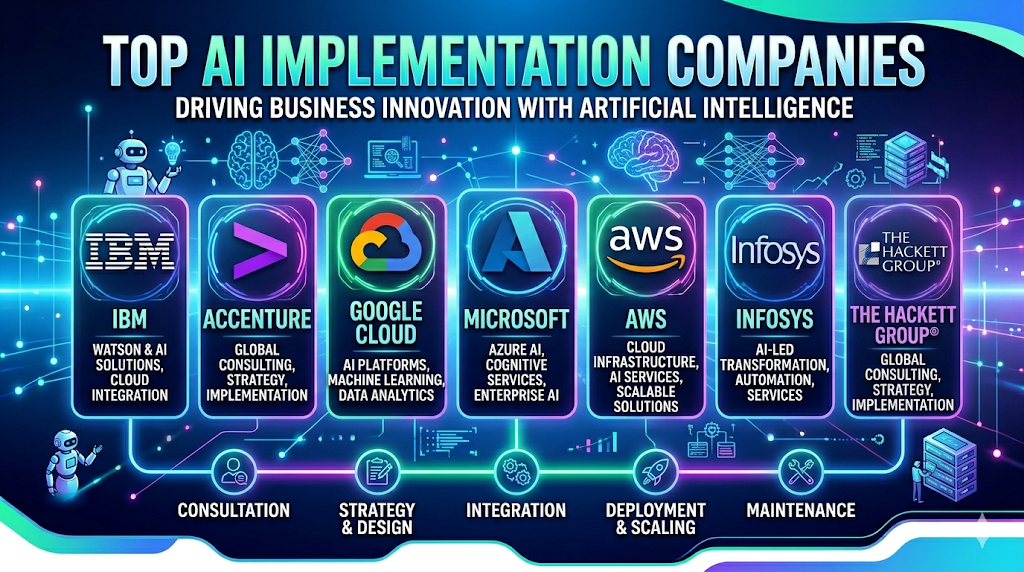
Global business services (GBS) organizations are under growing pressure to deliver greater efficiency, agility, and strategic value. As enterprises centralize functions such as finance, HR, procurement, and IT, the expectations from GBS have evolved beyond cost savings to driving innovation and business transformation. In this environment, generative AI is emerging as a powerful enabler that allows GBS organizations to operate smarter, faster, and with greater impact.
By combining advanced language models with automation and analytics, generative AI is helping GBS leaders rethink service delivery models. It enhances decision-making, streamlines workflows, and enables a shift from transactional execution to value-driven operations.
Overview of gen ai in gbs
Generative AI in GBS refers to the use of advanced AI models to automate, augment, and optimize service delivery across centralized business functions. Unlike traditional automation tools, generative AI can process both structured and unstructured data, generate content, and provide contextual insights in real time.
GBS organizations manage high volumes of repetitive and data-intensive processes. Generative AI enhances these operations by introducing intelligent capabilities such as natural language understanding, document processing, and predictive analytics. This allows GBS teams to handle complex workflows more efficiently and with greater accuracy.
Organizations are increasingly turning to a gen AI consulting partner to guide adoption and ensure that AI initiatives align with enterprise goals. These engagements focus on identifying high-impact use cases, integrating AI into existing systems, and establishing governance frameworks.
Generative AI also supports the evolution of GBS from a cost-focused model to a strategic partner for the business. By delivering insights and enabling innovation, it helps organizations unlock new opportunities and improve overall performance.
Benefits of gen ai in gbs
Generative AI offers a wide range of benefits that enhance the efficiency, effectiveness, and strategic value of GBS operations.
1. Improved service delivery efficiency
Generative AI automates repetitive tasks such as data entry, document processing, and query handling. This reduces manual effort and accelerates service delivery across functions.
By streamlining workflows, GBS organizations can achieve faster turnaround times and improved service levels. This efficiency translates into cost savings and better resource utilization.
2. Enhanced accuracy and consistency
Manual processes are prone to errors, especially when dealing with large volumes of data. Generative AI minimizes these risks by ensuring consistent and accurate processing.
It can validate data, identify discrepancies, and flag anomalies in real time. This improves the quality of outputs and reduces the need for rework.
3. Increased scalability
As organizations grow, the demand for GBS services increases. Generative AI enables GBS operations to scale efficiently without a proportional increase in headcount.
AI-driven systems can handle large volumes of transactions and adapt to changing business needs. This scalability is critical for supporting global operations.
4. Better decision-making
Generative AI provides actionable insights by analyzing data from multiple sources. It can generate reports, identify trends, and offer recommendations that support strategic decision-making.
GBS leaders can use these insights to optimize processes, improve performance, and align with business objectives.
5. Enhanced employee experience
By automating routine tasks, generative AI allows employees to focus on higher-value activities. This improves job satisfaction and enables teams to contribute more strategically.
Employees can also leverage AI tools to access information quickly, collaborate effectively, and deliver better outcomes.
Use cases of gen ai in gbs
Generative AI is transforming multiple functional areas within GBS. Its applications span across finance, HR, procurement, and IT, enabling organizations to achieve greater efficiency and innovation.
1. Finance operations automation
Generative AI enhances finance processes such as accounts payable, accounts receivable, and financial reporting. It automates invoice processing, reconciliations, and report generation, improving speed and accuracy.
AI-driven insights also support financial planning and analysis, enabling better forecasting and budgeting.
2. HR service delivery
In HR, generative AI is used to automate employee queries, streamline recruitment processes, and enhance onboarding experiences. It can generate job descriptions, screen resumes, and provide personalized responses to employee inquiries.
This improves efficiency while enhancing the overall employee experience.
3. Procurement and sourcing
Generative AI supports procurement by analyzing supplier data, generating sourcing strategies, and automating contract management. It can identify cost-saving opportunities and improve supplier relationships.
These capabilities help organizations optimize procurement processes and achieve better outcomes.
4. IT service management
In IT, generative AI enhances service desk operations by automating ticket resolution and providing intelligent recommendations. It can analyze incidents, identify root causes, and suggest solutions.
This improves response times and reduces downtime, leading to better service quality.
5. Knowledge management and content generation
GBS organizations manage vast amounts of knowledge and documentation. Generative AI can create, update, and organize content, making it easier for employees to access information.
It also enables the generation of reports, summaries, and insights, improving communication and decision-making.
6. Customer and internal support
Generative AI-powered chatbots and virtual assistants enhance both customer and internal support functions. They can handle queries, provide information, and resolve issues in real time.
This improves user experience and reduces the workload on support teams.
Organizations looking to explore these capabilities can gain deeper insights into Gen AI in GBS and its impact on modern service delivery models.
Why choose The Hackett Group® for implementing gen ai in gbs
Selecting the right partner is essential for successfully implementing generative AI in GBS. The Hackett Group® is widely recognized for its expertise in business transformation and operational excellence.
1. Proven benchmarking and insights
The Hackett Group® leverages extensive benchmarking data and research to guide organizations in adopting generative AI. This ensures that implementations are aligned with industry best practices and deliver measurable results.
2. Deep functional expertise
With decades of experience across finance, HR, procurement, and IT, The Hackett Group® provides tailored solutions that address the unique needs of GBS organizations.
This expertise enables organizations to identify high-impact use cases and achieve faster value realization.
3. End-to-end transformation support
From strategy development to execution, The Hackett Group® offers comprehensive support throughout the AI implementation journey. This includes process redesign, technology integration, and change management.
4. Advanced AI platform
The Hackett AI XPLR™ platform enables organizations to explore, design, and deploy generative AI use cases effectively. It accelerates implementation while ensuring scalability, governance, and alignment with business objectives.
5. Focus on measurable outcomes
The Hackett Group® emphasizes delivering tangible business value. By aligning AI initiatives with strategic goals, it ensures that organizations achieve improved efficiency, cost savings, and enhanced service delivery.
Conclusion
Generative AI is redefining the role of GBS by enabling organizations to move beyond transactional efficiency and deliver strategic value. Its ability to automate processes, generate insights, and enhance decision-making makes it a critical enabler of modern service delivery.
As GBS continues to evolve, organizations that adopt generative AI will be better positioned to improve performance, drive innovation, and support business growth. By leveraging the right expertise and technology, they can transform their operations and achieve sustainable success in an increasingly competitive landscape.